
Refrigerant Leak Repair in Austin, TX
We locate and repair AC refrigerant leaks across Austin and nearby communities.
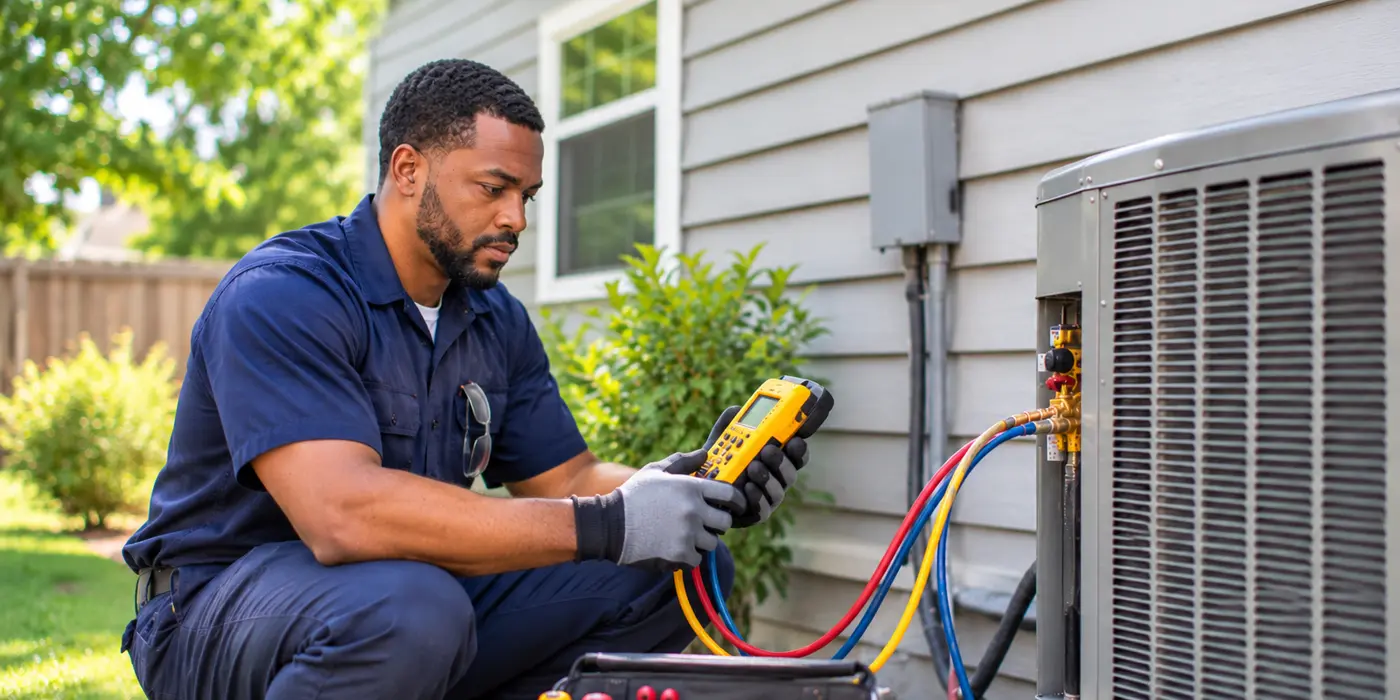
Turning the thermostat down, replacing a dirty air filter, and checking the breaker are sensible first steps when an AC starts blowing warm air. We see those steps solve airflow and control problems often enough that they are worth trying. A refrigerant leak has a different limit: the sealed line set loses charge, and the thermostat cannot replace refrigerant. Adding refrigerant without locating the leak may cool the house briefly, but the pressure loss returns.
A refrigerant leak can develop at a service port, copper joint, condenser coil, evaporator coil, or line set. We trace leaks for homeowners in Austin, Rollingwood, West Lake Hills, and Lost Creek instead of treating low charge as the repair itself. Refrigerant leak work should not wait when the system is running low, because an evaporator coil can freeze and the compressor can run under damaging strain. Continued operation can also release more refrigerant through the same opening.
Warm air and icy lines
Warm air from the supply vents is a common call when the thermostat is set below the indoor temperature. We also hear reports of a faint hissing sound near the outdoor condenser, although many leaks make no sound at all. Ice on the large copper suction line or on the indoor evaporator cabinet can point to a low refrigerant charge. A system that runs for long periods without lowering the temperature can also have a leak, a failed blower component, or a dirty coil.
We check the refrigerant circuit before deciding which symptom points to the actual fault. Warm air can come from an electrical problem, while frost can result from restricted airflow rather than a hole in the line set. Each fault needs its own repair method, parts, and labor, so similar symptoms do not mean the same bill.
Refrigerant circuit inspection
During a refrigerant circuit inspection, we read operating pressures at the service ports and compare them with the equipment data, outdoor temperature, and indoor airflow. We inspect the condenser coil, exposed copper line set, valve cores, caps, braze joints, and evaporator cabinet with an electronic leak detector and, where appropriate, bubble solution or dye. We also measure temperature split, superheat, and subcooling to separate a refrigerant loss from an airflow or metering problem. A straightforward diagnostic visit commonly takes 30 to 60 minutes when the outdoor unit and service ports are accessible, while an intermittent leak can take longer to isolate.
After we confirm an accessible leak, we can often replace a Schrader valve core or address a service-port leak during the visit, then pressure-test, evacuate, and recharge the system to the manufacturer’s specification. A properly evacuated circuit is commonly drawn near 500 microns before refrigerant is added. An evaporator coil leak, concealed line-set damage, or a coil that must be ordered is usually scheduled for another visit because cabinet removal and replacement parts are involved.
Coil access and line joints
A leaking service-port core behind an outdoor-unit cap is generally simpler to reach than a leak in an evaporator coil inside an air handler. Corrosion on a coil, a damaged copper line in a wall, and a failed braze joint each require different labor and materials. Access through an attic, crawl space, roof route, or locked mechanical room can add setup and removal work before we can reach the refrigerant circuit.
Equipment age affects the refrigerant listed on the model plate, the condition of coil metal, and the availability of compatible replacement parts. A discontinued refrigerant, an ordered evaporator coil, or a line set routed behind finished walls can place the repair at the more involved end of the job. We also account for property approval, panel removal, and any equipment isolation needed to reach the leaking component without damaging the cabinet or insulation.
Model plate and coil location
Before calling, locate the model and serial number on the data plate of the outdoor condenser, usually on the cabinet near the electrical compartment. We can use the plate to identify the refrigerant type and narrow down compatible valve cores, coils, and other parts. Please note the approximate age of the AC system, the room that is not cooling, and whether the indoor coil is in an attic, closet, garage, or mechanical room. Tell us whether the outdoor fan, indoor blower, or compressor is running now, and describe any gate, ladder, attic hatch, or parking restriction affecting access to the condenser. Call Austin Air Conditioning Company at (512) 318-9239 before a low refrigerant charge turns evaporator-coil frost into added compressor strain.
When we are open
Mon–Sun Open 24 hours
Next
Next: air duct cleaning, or back to the home page.